
The Death of the Castle-and-Moat Model
For over three decades, enterprise security was built on a simple, physical-world analogy: the Castle and Moat. If you were inside the castle walls (the corporate network), you were trusted. If you were outside, you were a threat. This model worked perfectly in an era where employees worked from a single office and applications lived on on-premise servers. However, the rise of Cloud Computing and the explosion of the Distributed Workforce have turned this moat into a liability.
In today's landscape, your "castle" has millions of gates. Every employee's smartphone, every SaaS tool like Slack or Jira, and every remote developer's laptop represents a potential entry point. When an organization relies on a binary "inside/outside" trust model—typically enforced by a VPN—they create a high-risk environment. Once an attacker breaches a single device or steals a set of credentials, they become a "trusted user" with the freedom to move laterally across the entire network. This lateral mobility is how modern ransomware families like Conti or LockBit cripple entire global operations in hours.
Definitional Zero-Trust: Trust is a Vulnerability
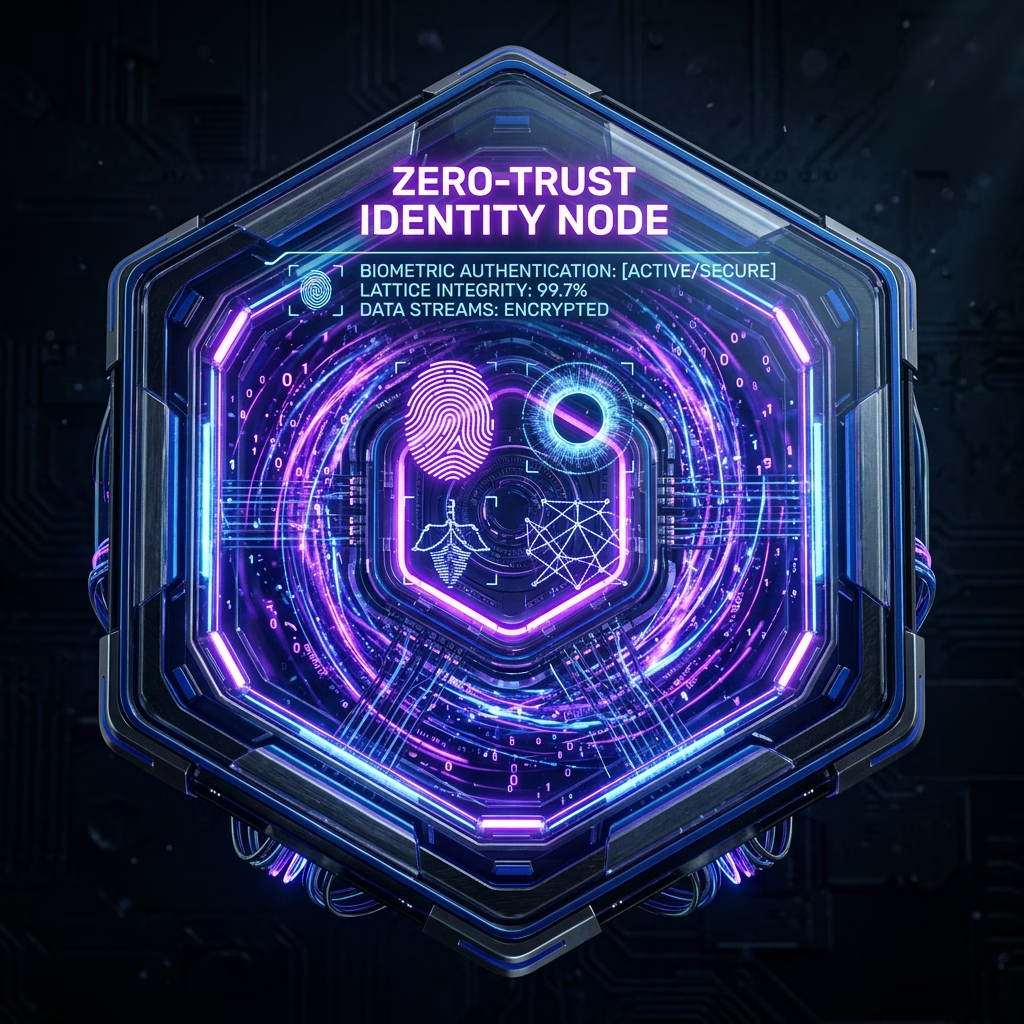
Zero-Trust Architecture (ZTA) is not a single product or a line in a budget; it is a fundamental shift in security philosophy. The mantra is simple: Never Trust, Always Verify. Under a Zero-Trust framework, location is no longer a proxy for security. Whether a request originates from a desktop in the head office or a laptop on public Wi-Fi in Tokyo, it is treated with equal skepticism.
By treating every connection as potentially hostile, ZTA enforces granular controls that intercept every packet and verify every identity. It transforms the network from a wide-open field into a series of micro-segmented vaults, each requiring its own digital key based on real-time context.
Core Pillars of ZTA Implementation
Building a resilient Zero-Trust environment requires a multi-layered approach that integrates identity, device health, and network telemetry.
Identity-Centric Security (IdP)
Identity is the new perimeter. Organizations must move beyond static passwords and implement Multi-Factor Authentication (MFA)—specifically FIDO2/WebAuthn-based hardware keys that are resistant to phishing. The identity provider (IdP) becomes the "Policy Decision Point," evaluating dozens of signals before granting access.
Device Posture Assessment
A valid username and password are not enough if they are entered on a compromised device. ZTA requires continuous checking of device health: Is the latest OS patch installed? Is the EDR (Endpoint Detection and Response) active? Has the device been jailbroken? If the device fails any check, access is revoked or limited until compliance is restored.
Micro-Segmentation
This is the process of breaking the flat network into small, isolated segments. By using Software-Defined Perimeters (SDP), we can ensure that a developer can reach the Git repository but has absolutely no path to the Payroll database, even if they are on the same VLAN. This drastically reduces the "blast radius" of any compromise.
Overcoming Legacy Technical Debt
Many CIOs hesitate to adopt Zero-Trust because of legacy applications that "don't speak ZT." Older mainframe apps or internal tools without modern API support can follow traditional protocols that make ZTA difficult. The solution is the Identity-Aware Proxy (IAP). By wrapping legacy applications in a modern proxy, you can add MFA and granular access controls without changing a single line of the original code.
The Human Element in ZTA
Technology is only half the equation. Zero-Trust requires a cultural shift where "trust but verify" is replaced by "never trust, always verify." This means even the CEO's device is treated as a potential threat vector until proven otherwise by multiple cryptographic signals.
Your Zero-Trust Roadmap
Transitioning is a marathon. Start with these high-impact wins:
- Inventory Everything: You cannot protect what you cannot see. Map your users, devices, and critical data flows.
- Kill the VPN: Transition your most used remote apps to an IAP model.
- Enforce MFA: Make no exceptions. MFA must be global and mandatory.
- Automate Policy: Use CI/CD to update access rules based on identity groups rather than IP addresses.