
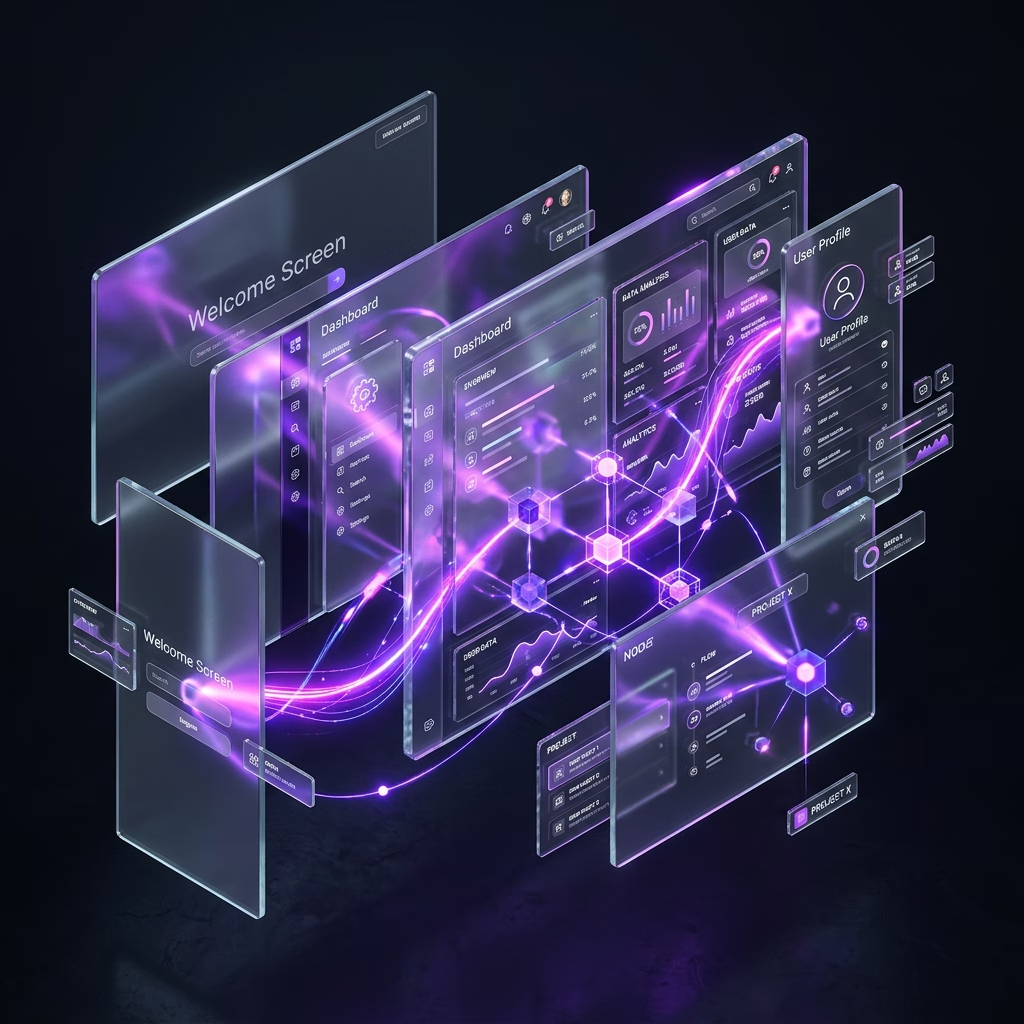
Challenge
SaaS info overload causing high drop-off.
Solution
Isometric depth hierarchy for visual sorting.
Result
22% reduction in cognitive load.
The Need for Physicality in a Digital World
As software becomes more abstract and "invisible," users subconsciously crave signs of structural integrity. In the early days of the web, skeuomorphism was the answer. Today, we've matured. We don't need digital leather textures; we need visual physics.
By using shadows, layering, and subtle depth cues, we signal to the user that the interface has substance—that it is a "tool" rather than just a collection of floating pixels.
Technical Insight
Glassmorphism isn't just a style; it's a structural indicator. By using blur and transparency, we signal to the brain which elements are "above" the content, reducing cognitive load for complex navigation.
Why Isometric? The Engineering Perspective
Isometric design provides a unique blend of technical precision and artistic elegance. It mimics the blueprints of architects and the schematics of engineers. For a B2B audience, this visual language signals "built, not just drawn." It implies that the underlying technology is robust and professionally engineered.
Driving User Confidence through Hierarchy
Trust is built when a user feels in control. A flat, cluttered UI feels chaotic—like a desk piled high with papers. A UI with depth feels organized—like a well-labeled filing system. By elevating primary actions and receding secondary information, we guide the user's eye and reduce decision fatigue.
Confidence leads to conversion. When a user trusts the interface, they are more likely to engage with high-value features and commit to long-term workflows.
Designing the Future of Trust
The next generation of enterprise software will be defined by its ability to foster human confidence. Design is not just "how it looks"; it's how it feels to interact with a system that feels solid, reliable, and expert.
Isometric trust is our framework for building that future.