
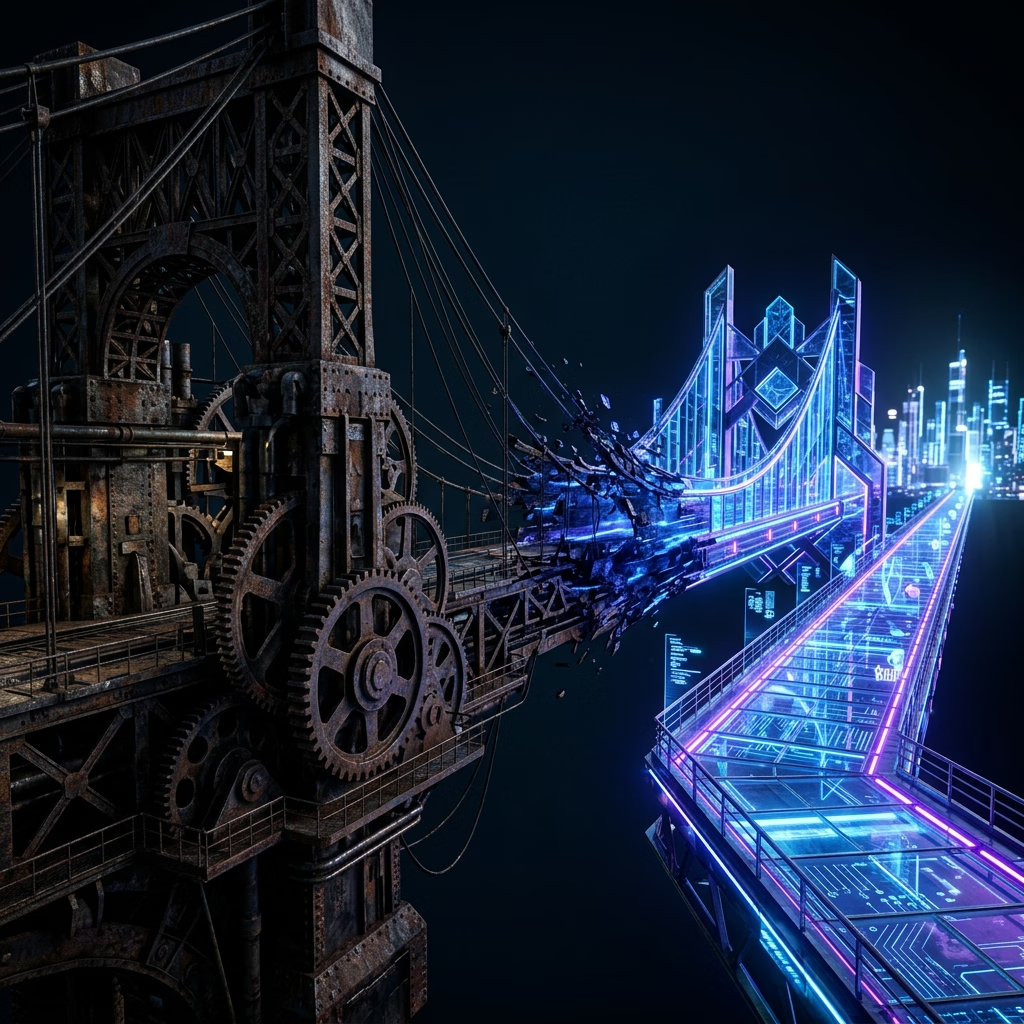
The Legacy Debt Crisis
In the technology world, "Legacy" is often treated as a dirty word. However, for most established enterprises, legacy systems are the engines that drive millions of dollars in daily revenue. The challenge isn't just "replacing" them; it's modernizing them while they are still in motion.
This is the Digital Transformation Paradox: you must rebuild the plane while it is carrying 500 passengers at 30,000 feet.
The Strangler Fig Pattern: A Surgical Approach
Named after a type of tree that grows around a host until the host eventually dies, the Strangler Fig Pattern is the gold standard for low-risk migration. Instead of a "Big Bang" rewrite, you gradually replace specific functionalities of the legacy system with new microservices.
Technical Insight
The Anti-Corruption Layer (ACL) is a technical bridge that translates domain models between legacy and modern systems, preventing the new architecture's domain from being "polluted" by legacy technical debt.
Blue/Green Deployments: The Safety Net
Risk mitigation is the soul of migration. Blue/Green Deployment involves running two identical production environments. "Blue" is the live environment; "Green" is the new version. Once "Green" passes all checks, the load balancer flips the switch. This eliminates maintenance window anxiety.
Managing the Human Element
The biggest hurdle in legacy migration isn't the code; it's the culture. Your team has years of muscle memory tied to the old system. Successful transformation requires consistent training and a clear roadmap that shows value at every milestone.
At Lumiseq, we act as the bridge between your legacy expertise and modern execution, ensuring technical evolution doesn't break business continuity.